

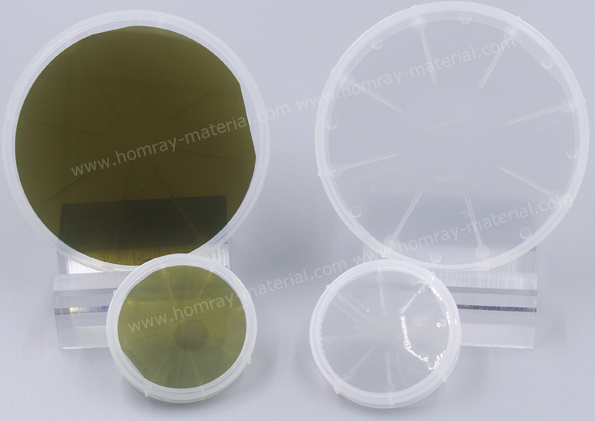
The production process of silicon carbide ceramics involves several stages such as powder preparation, molding, and sintering, which differ significantly from single-crystal preparation. Based on the sintering process, silicon carbide ceramics are further categorized into pressureless sintered silicon carbide ceramics, reaction-bonded silicon carbide ceramics, and recrystallized silicon carbide ceramics.
The reaction-bonded silicon carbide process involves mixing a carbon sourcewith silicon carbide powder, forming a green body through methods such as slip casting, dry pressing, or cold isostatic pressing, followed by silicon infiltration. This involves heating the green body to temperatures above 1500°C in a vacuum or inert atmosphere, causing solid silicon to melt into liquid silicon. The liquid silicon infiltrates the porous green body via capillary action. The liquid silicon or silicon vapor reacts with the carbon in the green body, generating β-SiC in situ. This newly formed β-SiC bonds with the existing SiC particles in the green body, resulting in reaction-bonded silicon carbide ceramic material.
Pressureless sintered silicon carbide is densified without applying external
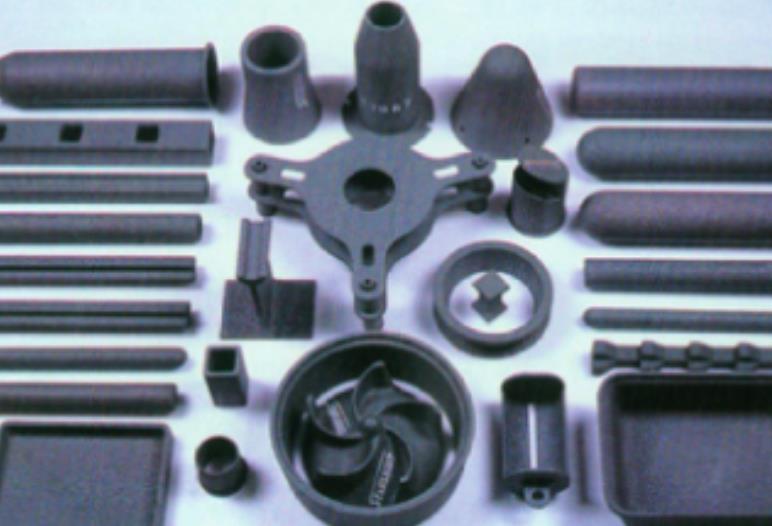
Recrystallized silicon carbide is produced by grading SiC particles of different sizes in a specific ratio and forming them into a green body. Within the green body, fine particles are uniformly distributed in the pores between coarse particles. At temperatures above 2100°C and under a protective gas flow, the fine SiC particles gradually evaporate and then re-condense and precipitate at the contact points of the coarse particles until the fine particles completely disappear. This evaporation-condensation mechanism results in the formation of new grain boundaries at the necks between particles, causing fine particles to
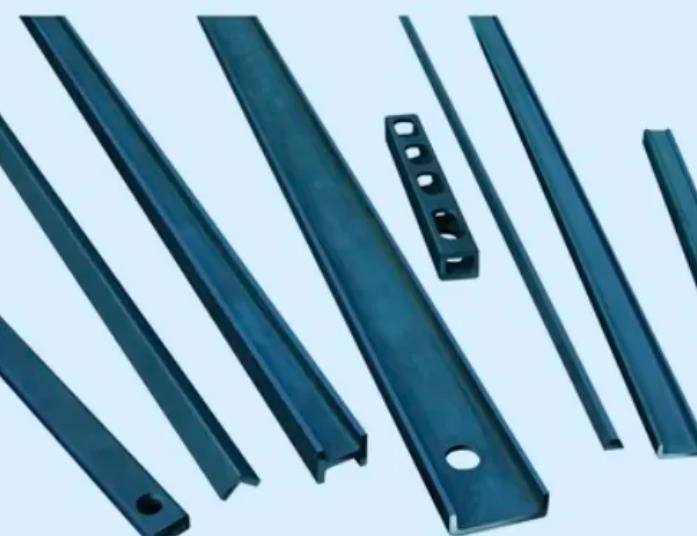
migrate and form bridging structures between large particles, creating a sintered body with a certain porosity. Recrystallized silicon carbide contains no metallic or glassy phases and has a relatively high porosity (10%~20%). Consequently, it exhibits excellent high-temperature resistance and thermal shock resistance. Combined with its good high-temperature thermal conductivity, it is an ideal candidate material for high-temperature kiln furniture, heat exchangers, or burner nozzles.
Recrystallized silicon carbide is a type of silicon carbide ceramic. Silicon carbide semiconductor material exists in a single-crystal form. The two differ significantly in terms of preparation processes, equipment, and applications. However, both require silicon carbide powder as the starting material. Additionally, both involve processes transitioning from solidification to gasification and back to solidification at high temperatures, although the difficulty of reaction control during these processes varies considerably.
 Homray Material Technology. All rights Reserved.
 E-mail:kim@homray-material.com;tina@homray-material.com